
8 min read / Updated 2026-05-08
Fuse Keeps Blowing? How to Use a Wiring Diagram to Find the Short
A practical short-circuit workflow for fuses that keep blowing, including load isolation, connector separation, harness rub points, and safe current-limited testing.
Do not keep replacing the fuse
A fuse that blows again is protecting the wiring from excessive current. Replacing it repeatedly can heat the harness, damage connectors, or hide the real fault until it becomes harder to find.
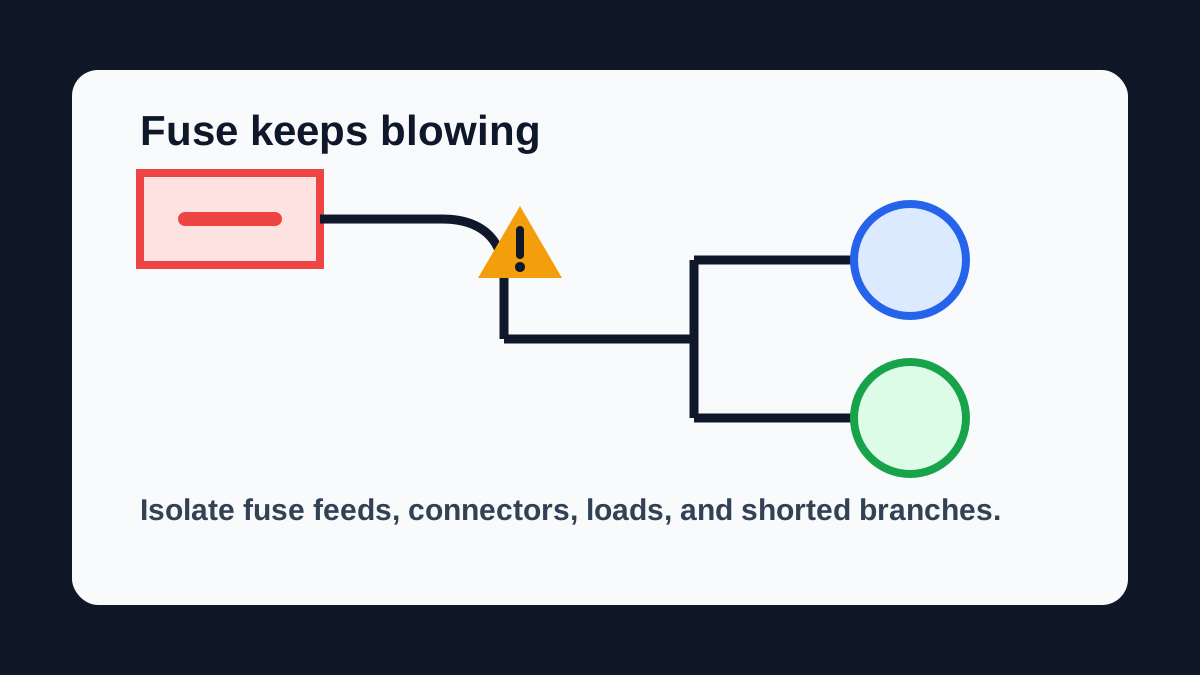
Use the wiring diagram to identify every load, branch, splice, connector, and module fed by that fuse. The goal is to divide the circuit into smaller sections until the shorted branch is isolated.
Separate load-side faults from feed-side faults
If the fuse blows immediately with the load disconnected, the short may be between the fuse and the first connector or splice. If it blows only after a switch or relay turns on, the fault is likely farther downstream.
A diagram shows where the relay contacts, switches, and splices sit in the path. That lets you test the correct section instead of unplugging random components.
Use connector breaks as checkpoints
Disconnecting a connector shown in the diagram can remove a whole branch from the fuse. If the fuse stops blowing after that connector is opened, the short is downstream of that point.
This method works best when you write down each connector test. Good notes prevent confusion when a circuit has several branches, option splits, or hidden splices.
Look for physical damage after the diagram narrows the area
Common short locations include door jambs, seat tracks, trunk hinges, engine movement points, sharp brackets, aftermarket accessory taps, and water-damaged connectors. The diagram tells you which harness section matters most.
Use safe current-limited testing where appropriate, and avoid bypassing fuse protection. A wiring diagram is a map, but safe electrical testing still controls the repair risk.
Questions buyers ask
Can a bigger fuse fix the problem?
No. A larger fuse can allow too much current and damage the harness. The correct repair is to find and fix the short or overloaded branch.
Why does the fuse only blow sometimes?
Intermittent shorts often depend on vibration, movement, water, temperature, or load command. Use the diagram to identify moving harness areas and switched branches.